Amsterdam: Schiphol Trains, Canals and a First-Day Plan
Published by FlyingWithSources checked
Amsterdam suits first-time visitors, solo travellers and anyone who prefers to move on foot and by tram in a compact centre. This page covers the Schiphol train, GVB trams and OVpay, where to stay in Centrum, the Jordaan and Museumkwartier, and a paced first day. The mistake first-timers make most often is stepping into a bike lane as if it were pavement: in Amsterdam the bike lane is a traffic lane.
Find a place to stay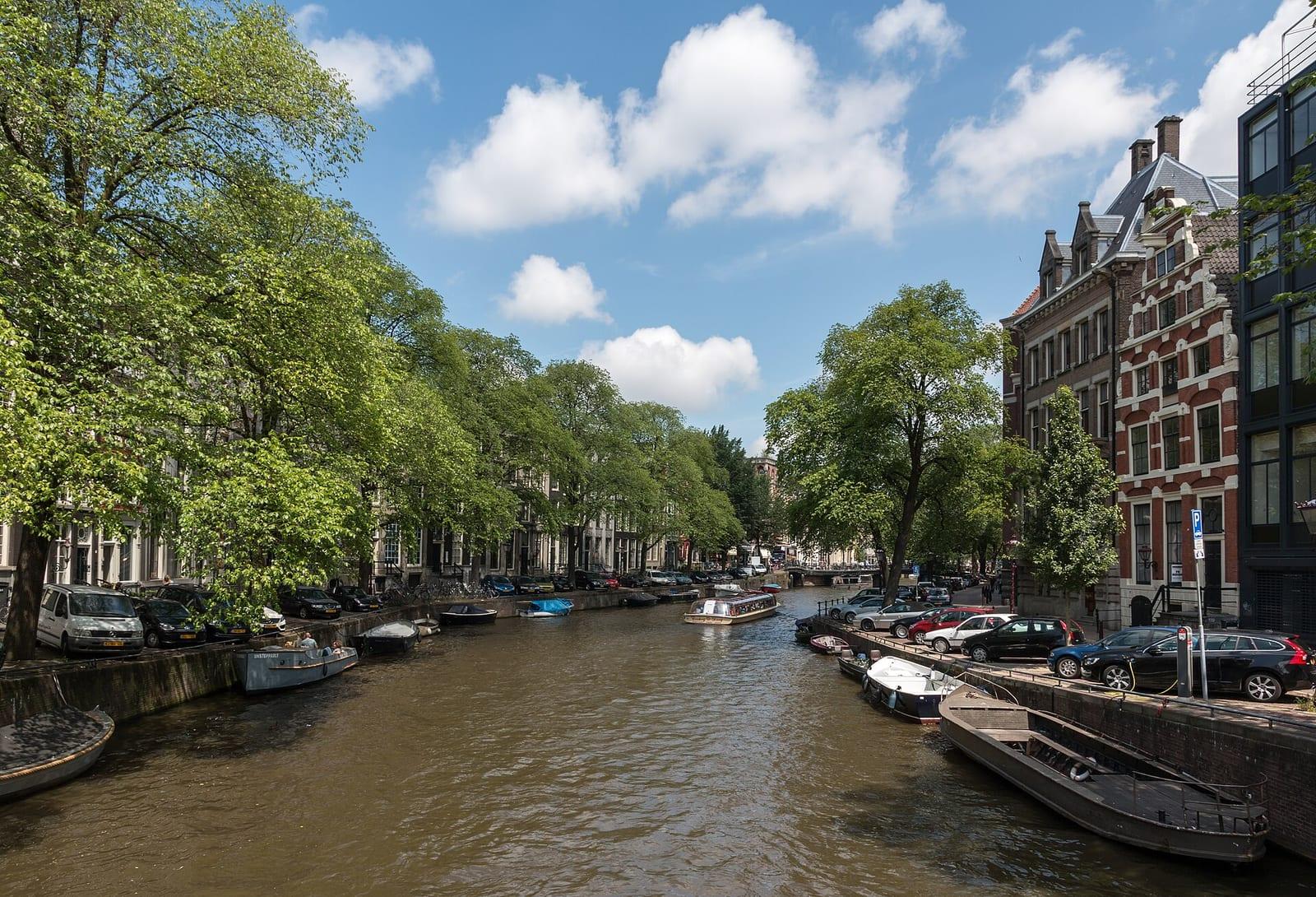
Compare flights when you’re ready.
In pictures
Open a photo for a closer look.
01Official rules: where they are set
Entry requirements, the laws that differ from Canada's, and the current safety assessment for the Netherlands are published by the Government of Canada in its travel advice for the Netherlands, linked below. Read it before booking and again before flying, and follow its links to the Netherlands authorities and the official European sources for the document rules themselves.
Amsterdam is served by one airport, Schiphol (AMS), and the Netherlands sits inside the Schengen area and the European Union's travel systems. Which authorisations apply, and when new systems start, is decided by the European Union and the Dutch authorities; the Canada page links to the official European sources, so follow those links rather than any commercial application site.
02Getting there and around: verified transport information
Schiphol's own site states that the NS station sits directly below the terminal, that trains reach Amsterdam Centraal in 14 to 17 minutes, and that a train runs eight times an hour between Centraal and Schiphol. Follow the signs from arrivals to Schiphol Plaza and down to the platforms, and check in and out with a contactless card or a ticket bought at the airport, as Schiphol and NS publish.
Buses leave from outside Schiphol Plaza, and Schiphol lists the Amsterdam Airport Express among the options towards the Museumkwartier and Leidseplein side of the city; the night service covers the hours when trains are less frequent. Official taxis use the rank in front of Schiphol Plaza. For most stays in Centrum, Jordaan or Museumkwartier, the train to Centraal plus a tram or a walk is the simplest arrival.
Inside the city, GVB runs the trams, metro, buses and ferries. GVB publishes two simple ways to pay: OVpay, checking in and out with a contactless bank card, phone or watch, with one card or device per person, and day tickets in the GVB app valid for 24 to 120 hours from the first check-in. GVB day tickets cover GVB services only and are not valid on NS trains, so the airport train leg is paid separately.
The I amsterdam City Card, published by the city's official visitor organisation, bundles museum entry with GVB travel for a set number of hours; I amsterdam lists the Rijksmuseum and 80 other museums and attractions among the inclusions, plus a canal cruise. Travellers with reduced mobility should check step-free access station by station with GVB and NS, and arrange airport assistance through the airline, because canal bridges and older tram stops are not uniformly step-free.
03Getting it right on the ground: practical customs that vary
The currency is the euro. The Netherlands runs close to cashless in city transport and many shops: GVB services take contactless cards rather than cash on board, and cards are accepted widely in hotels and restaurants. Keep a small amount of cash for market stalls and small cafés, and check the home bank's euro transaction fees before travelling.
Dutch is the official language, and English is widely spoken in Amsterdam's hotels, stations and museums, so most arrival tasks can be done in English. Signs and announcements at Schiphol appear in English as well as Dutch, as the airport publishes. A data plan or eSIM keeps the NS and GVB planners, maps and airline apps working on the move; the checklists below cover the setup.
The ground rule that matters most is the bike lane. Cycle paths run beside sidewalks across the centre, often in a red surface, and they are traffic lanes, not pavement: look both ways before crossing one, and never stand or walk in one to take a photograph. Trams also have priority at many junctions, so cross tram tracks at marked crossings and after looking both ways.
04Optional courtesies
A greeting in Dutch opens most exchanges: Goedemorgen in the morning, Goedemiddag in the afternoon and Goedenavond in the evening, with Dank u wel for thank you. None of it is required, because English is understood widely, but the attempt is noticed and answered in kind, often in English.
In cafés and restaurants, service is unhurried and the bill comes when it is asked for; asking for the rekening is the normal signal, not a complaint. Rounding up or leaving a small amount for good service is customary in sit-down restaurants, and card machines increasingly offer the choice on screen.
05Where to stay: Centrum, Jordaan and Museumkwartier
Centrum, the canal belt inside the Singelgracht, puts Centraal station, the main shopping streets and the canal rings within walking distance, and it holds the widest range of hotels. It is also the busiest and loudest base, especially around the station and the entertainment streets. The Jordaan, west of the centre, is a former working district of narrow streets, small canals such as the Brouwersgracht in the gallery, and smaller hotels and apartments; it is quieter in the evening and still an easy walk or tram ride from Centraal.
Museumkwartier, south of the centre around Museumplein, is the base for the Rijksmuseum, the Van Gogh Museum and the Concertgebouw, with wider streets and larger hotels. It suits travellers whose days centre on the museums and who prefer a calmer evening. In all three areas, ask about stairs before booking: canal houses often have steep, narrow staircases and no lift, whatever the star rating.
06On foot: canals, bridges and bike lanes
The centre is compact and flat, and most trips inside the canal belt are walkable in one outing: Centrum to Jordaan is a short walk west, and Museumkwartier is a longer walk south past the canals or one tram ride. The walkway surface changes constantly, from pavement to cobbles to bridge steps, and every canal crossing climbs a small bridge, so a route that looks short on the map still takes time.
Walk on the pavement, not the red bike lane, and treat every side street as a junction where bicycles may approach quietly and quickly. A good first walk follows one canal in one direction, crosses at a bridge, and returns along the next canal; that loop covers the canal belt without backtracking and keeps Centraal or the hotel easy to regain.
07A first day in Amsterdam: Centraal, one canal walk, an early evening
Take the train from Schiphol to Amsterdam Centraal, check in or leave bags, and keep the first hour simple: a coffee near the hotel and a short walk to the nearest tram stop so the return route is clear. If the arrival is early, the streets around Centraal and the first canal ring give an orientation walk without any ticket or booking.
In the afternoon, walk one canal loop: out along the Herengracht or Prinsengracht, across a bridge, and back through the Jordaan streets, stopping at one sight only. Museum visits need booked time slots at the busiest houses, so put a single museum here only if a slot was booked in advance; otherwise keep the afternoon outdoors and book for the next day.
In the evening, eat near the base rather than across the city, and take a tram back if the walk crosses the whole centre. Check the next day's NS and GVB service information before sleeping, set one bank card as the single check-in and check-out method, and note that every transit ride needs a check-out as well as a check-in.
08Common visitor mistakes
The most expensive mistake is forgetting to check out. OVpay and tickets charge by completed journeys, and GVB and NS both instruct travellers to check in and out on every ride, including changes; a missed check-out can mean the full or corrected fare is applied later. The second mistake is using one card for two people: GVB states one card or device per person.
The other common errors are about space and assumptions: standing in a bike lane to read a map, assuming a GVB day ticket covers the Schiphol train when GVB states it does not cover NS services, and booking a canal house room without asking about stairs. Each one is avoided by stepping onto the pavement, paying the airport leg separately, and asking the hotel one direct question before paying.
09Safety
The Government of Canada's travel advice for the Netherlands, linked below, is the primary source for safety, laws and entry requirements. It covers the current assessment, the areas where pickpocketing is reported in Amsterdam, and the conduct expected around demonstrations and large gatherings.
Beyond that advice, the practical habits are specific to this city: keep bags closed and attended on trams and at Centraal station, look for bicycles before stepping off any pavement, and use the official taxi rank at Schiphol rather than offers inside the terminal. Copies of the passport and booking details, kept separately from the originals, make any loss easier to resolve.
10If you're flying with something particular
Travellers with reduced mobility should plan around the honest ground truth of the centre: canal bridges have steps, many streets are cobbled, bicycles park across pavements, and canal house hotels often have steep stairs and no lift. Ask any hotel for step-free access details and photographs of the entrance and bathroom before booking, check step-free routes with GVB and NS, and arrange airport assistance through the airline.
Solo and first-time visitors gain from the city's compact scale: one base inside the canal belt, the tram for longer jumps, and walking for the rest keeps navigation simple and evenings short. Keep the hotel address and the Centraal station direction saved offline, and let the first day stay small; the city rewards a second, better planned day more than a crowded first one.
Stay a little longer
Where will you base this trip?
Choose the base that fits the trip. Compare the two areas below and keep the same dates.
Before booking in Centrum, Amsterdam
- Confirm the hotel's nearest tram stop and the walk from Centraal station.
- Ask about stairs and lift access before booking a canal house room.
- Check the evening noise level on the street outside the hotel.
Choose a check-in date, then a duration to set check-out.
Still planning? Leave both dates blank to browse.
Your destination: Centrum, Amsterdam
Affiliate link through Stay22. FlyingWith may earn a commission if you book. The booking provider handles prices and payment.
Going somewhere else? Search worldwideReuse them on other accommodation searches and in another language. Only the dates are kept; clear them when your trip changes.
What should the property confirm?
Choose the arrangements you want to check before paying.
These are questions for the property. They do not filter the search results, and your choices stay on this page.
Keep a useful travel checklist in your inbox
Get the free checklist link and occasional FlyingWith travel tips. Your saved trip answers stay on this device.
Open the free trip checklist →Take it with you
Your pocket guide
Keep your next steps and useful phrases together in a colourful PDF travel card, ready to save or print.
Before you book
0 of 4 checked
Your checks stay in this tab when you reload or return to this guide. Reset them here, or close the tab when you finish.
Add a calendar reminder
A few useful words
Dutch
Dutch is the official language and English is widely spoken in Amsterdam, so most signs, station announcements and hotel desks work in both. The transport terms matter more than full phrases: inchecken and uitchecken mean check in and check out, and both are required on every ride.
- Goedemorgen.
- Good morning.
- Dank u wel.
- Thank you very much.
- Alstublieft.
- Please, and also here you are when handing something over.
- Waar is de tramhalte?
- Where is the tram stop?
- Waar is station Amsterdam Centraal?
- Where is Amsterdam Centraal station?
- De rekening, alstublieft.
- The bill, please.
Official sources
Rules and amounts change. Before you rely on anything marked as an official rule, check the source. These are the official pages we used.
- Travel advice and advisories: Netherlands · Government of Canada · checked Entry and exit requirements, laws and the current safety assessment for the Netherlands.
- Travelling by train from or to Schiphol · Amsterdam Airport Schiphol · checked The station below the terminal, train frequency and journey time between Schiphol and Amsterdam Centraal.
- NS: train tickets and journey planner · NS (Nederlandse Spoorwegen) · checked Train times, fares and check-in and check-out rules for national rail travel.
- Welcome to Amsterdam: tickets and OVpay · GVB · checked Tram, metro, bus and ferry payment in Amsterdam: OVpay and day tickets, and where each ticket is valid.
- I amsterdam: official visitor guide and City Card · I amsterdam (amsterdam&partners) · checked Official visitor information, neighbourhoods and what the I amsterdam City Card includes.
- Trains between Schiphol and Amsterdam Centraal, times and fares: NS.
- Tram, metro and bus tickets, day tickets and OVpay rules: GVB.
- Airport routes, taxi ranks and public transport at Schiphol: Amsterdam Airport Schiphol.
- Entry requirements and the current safety assessment for the Netherlands: the Government of Canada.
Share this guide
Saves a reading copy on this device, visible to anyone using it. Checklist answers and bookings are not saved. Browser storage can be cleared automatically; check your saved guides before travelling.
Help keep this page accurate
Opens an email draft with this page’s public link. You can review it before sending.
Continue planning
Flying there with a particular need
Not sure which applies to your trip? Build your trip profile
Travelling with others? Split costs without accounts.
Before you fly there
- Airport Transfer Checklist: Compare the Whole JourneyCompare public transport, taxis and prebooked airport transfers. Check pickup instructions, total cost, luggage, access and delay terms before paying.
- Travel eSIM Checklist: What to Check Before BuyingCheck device compatibility, coverage, activation and plan limits before buying a travel eSIM. Compare it with roaming and a local SIM, then save a backup.
Travel essentials
Complete your travel plans
Choose the service you need, then compare the offer and its terms with the provider.
Mobile data for your trip
Compare an eSIM with your carrier’s roaming offer and a local SIM. An eSIM only helps if your exact device and the plan suit the trip.
Affiliate partner options
Affiliate links through Travelpayouts. FlyingWith may earn a commission on an eligible purchase or paid service.
Build my eSIM shopping list →Checks before choosing
Installing an eSIM and starting its validity period can be different events. Follow the chosen plan’s instructions. The checklist is a reminder, not an automatic device check.
- Check the device model, purchase region and network lock with the provider before paying.
- Compare the countries covered, data allowance, validity start, hotspot rules and any speed limits.
- Check whether calls and SMS are included. Save maps, the hotel address and installation instructions for offline use.
Getting from the airport
Compare the airport’s official public transport and taxi information with a prebooked transfer. Choose based on the whole journey to your accommodation.
GetTransfer is a transfer marketplace. Availability and suitability depend on the offer; a listed vehicle does not confirm accessible transport or a child seat.
Affiliate partner options
Affiliate links through Travelpayouts. FlyingWith may earn a commission on an eligible purchase or paid service.
Take these details to your airport pickup quote
Copy these questions into your request. A marketplace listing alone does not confirm a child seat or accessible vehicle.
0 of 4 pickup details reviewed
Checks before choosing
- Confirm the exact terminal, meeting point, luggage space and contact method if your flight changes.
- Ask for written confirmation of any child seat, pet or mobility requirement before payment.
- Read the total price, waiting policy, cancellation deadline and refund method for the specific offer.
The provider handles prices, booking terms, payment and support. Review the details there before paying.
Sources checked