La Paz: crossing from Puno and Lake Titicaca into Bolivia
Published by FlyingWithSources checked
The road from Puno to La Paz crosses one of the classic land borders of South America: out of Peru at Desaguadero, over the bridge, and into Bolivia, then across the high plain to the canyon city. This page covers the entry rules, the crossing step by step, where to stay at both ends, and how to pace a first day at altitude.
Find a place to stay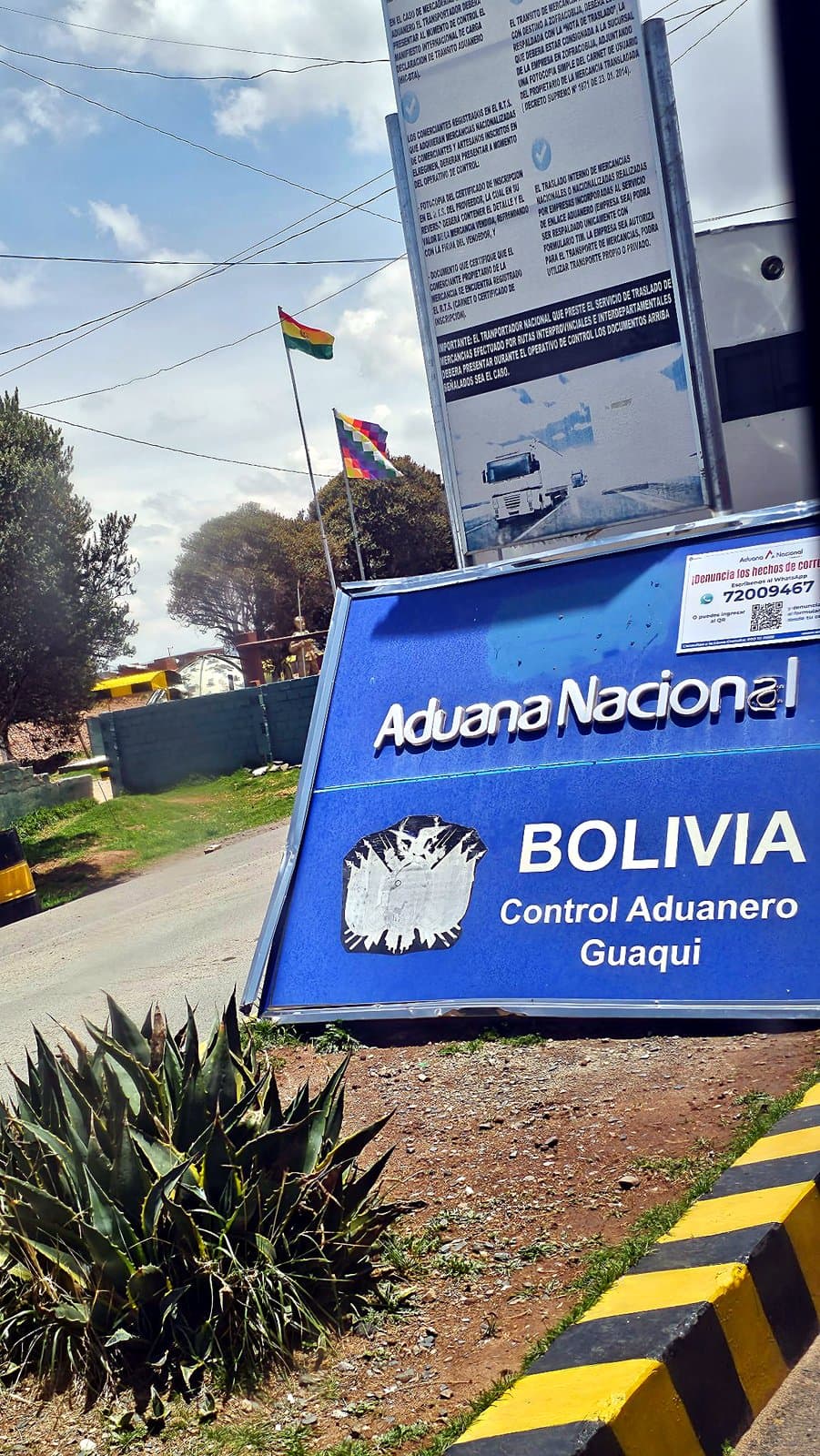 The Aduana Nacional customs control at Guaqui, on the road from the Desaguadero border to La Paz
Compare flights when you’re ready.
In pictures
Open a photo for a closer look.
01Official rules: passports, visas and your entry record
Bolivia sorts visitors into three groups by nationality. Travellers in Group I, which covers Canada, the United Kingdom, the European Union and, since December 2025, the United States, enter without a visa. Everyone else should confirm their group with Bolivia's Dirección General de Migración or a Bolivian consulate before travelling, because the lists change: the December 2025 change moved eight countries into Group I.
Carry a passport valid for at least six months. The stay granted at the border is usually 30 days, and it can be extended at a Migración office, free of charge, up to a maximum of 90 days in a calendar year. Canada's travel advice also describes a web-based registration, SIGEMIG, to complete before arrival with the lodging address for your whole stay; if you have not completed it, the officers at the post register you there, and missing registration can lead to a fine when you leave.
Get your exit from Peru and your entry into Bolivia both recorded, and keep the stamped passport safe. Canada's advice is explicit: at a land border, a missing entry stamp can mean a fine when you depart. Peru records movements electronically through its virtual Andean Migration Card (TAM Virtual), so the Peruvian half of the crossing is a record check as much as a stamp. Bolivian customs officers may also ask to see an onward or return ticket and proof of funds.
Yellow fever needs one check before you go. The CDC records that Bolivia requires a yellow fever vaccination certificate from travellers arriving from a country with a risk of yellow fever transmission, and Peru is such a country. If you hold a certificate, carry it with your passport; if you do not, confirm the current position with a Bolivian consulate before the crossing.
02The crossing, step by step: Puno to La Paz via Desaguadero
Tourist buses leave Puno's terminal in the morning, typically between about 06:00 and 07:30 Peruvian time, and run south along Lake Titicaca before turning inland to Desaguadero, roughly two and a half to three hours away. Keep your passport, medication, money and a warm layer in your daypack; on through buses the main luggage usually stays on board during the border stop, and the driver or tour staff will tell you what to carry off.
At Desaguadero both countries work from a shared binational border centre (CEBAF). Everyone leaves the bus. First comes the Peruvian exit control, where your departure is recorded; then you cross the bridge over the Desaguadero river and present yourself to Bolivian migration for the entry check and stamp. Allow roughly 30 to 60 minutes for the whole stop when queues are normal, and longer on busy market days.
Back on board, the road crosses the Bolivian altiplano towards La Paz, passing the Aduana Nacional customs control at Guaqui, where vehicles can be stopped for customs checks; the blue sign in this page's photographs marks the post. The run into La Paz takes about three more hours before the bus descends into the city and reaches the main bus terminal. Door to door, the journey typically takes six to seven hours. Bolivia is one hour ahead of Peru, so a morning departure from Puno arrives in the early afternoon by the Bolivian clock.
There is a slower alternative. The Kasani crossing, reached via Copacabana, takes roughly seven to nine hours with a short ferry ride across the Tiquina strait, and it suits travellers who want to stop in Copacabana or visit Isla del Sol. Desaguadero is the direct line; Kasani is the scenic detour. Either way, book a morning departure so a queue at the border cannot cost you the day.
03Getting around La Paz: cable cars, the airport and the bus terminal
La Paz moves by cable car. Mi Teleférico runs ten lines between El Alto on the rim and the neighbourhoods in the bowl below, and residents use it as everyday transit, not as a sightseeing ride. Stations carry both a Spanish and an Aymara name. For a visitor it is the fastest way to cross the city, the easiest way to understand its shape, and the kindest way to move at altitude, because the cabins do the climbing. Check the network map, fares and hours with Mi Teleférico before you rely on a specific line.
El Alto International Airport sits on the plateau above the city, higher than La Paz itself. No cable-car station serves the terminal directly: the standard options are an authorised taxi from the arrivals area, agreeing the fare before you ride, an airport minibus, or a short taxi ride to an El Alto cable-car station and the ride down into the bowl from there. Road times swing with traffic, so leave a generous margin in both directions.
Long-distance buses use the main bus terminal near the city centre, a short walk or taxi ride from the central cable-car stations. The Puno services arrive here, and the overnight buses for Uyuni leave from here or from the operators' offices nearby, which matters when you plan the onward trip in this site's Salar de Uyuni guide.
04Where to stay: Puno, the centre, Sopocachi and the Zona Sur
In Puno, stay in or near the centre if you have an early bus: pickups and the terminal run from there, and restaurants for a light evening meal are close. The lakefront is quieter, but it adds a transfer on the morning that matters most.
In La Paz the choice is about altitude and noise. The centre, around El Prado and the San Francisco church, is the closest base to the bus terminal, the markets and the oldest streets, with the widest range of budget rooms, and it is the loudest. Sopocachi, just west, is a calmer residential district of restaurants and mid-range hotels, well placed for the cable cars. The Zona Sur, the city's lowest districts around Calacoto and San Miguel, has the mildest air and the most modern hotels and malls, at the price of a taxi or cable-car ride to reach the sights.
Whichever district you choose, book the first night before you cross the border. You need the address for the SIGEMIG registration, and arriving at altitude is not the moment to go looking for a room.
05A first day in La Paz: take it gently
Plan the arrival day around the altitude, not around a checklist. La Paz sits at about 3,650 metres, and the CDC's guidance for high places is to ascend gradually, keep the first day easy and take symptoms seriously. From the bus terminal, go straight to your hotel, check in, drink water and eat something light. A short rest is a plan, not a failure.
In the middle of the afternoon, ride one cable-car line up towards El Alto and back down. You stay seated, the city explains itself below you, and you get the measure of the bowl you will be exploring. Come back down before dark, walk a few level blocks around San Francisco square and the Sagárnaga street stalls if you feel well, and keep dinner early and light. Save the steep streets, the viewpoints on foot and any alcohol for the second day, when your body has had a night at altitude.
If a headache, nausea or dizziness gets worse rather than better, or breathing feels hard at rest, treat it as a medical question, not a toughness test: rest, tell your hotel, and seek medical advice. Travellers with heart or lung conditions should discuss the whole route, which never drops below about 3,600 metres, with their doctor before travelling.
06The altiplano between the lake and the city
For most of the drive, the road crosses the puna: high, open grassland between Lake Titicaca and the cordillera, farmed in small plots and grazed by cattle and sheep. Villages are adobe and brick, built around a church, a school and a football pitch; the school in the photographs on this page, with its murals and painted-tyre fence, is typical of the road south of the lake.
Above the lake's southern shore the fields climb in terraces, some of them farmed for centuries, and herders still move animals on foot along the road margins. Drive times on this leg are steady rather than fast, and altiplano weather can turn from strong sun to hail within the hour, which is the practical reason for keeping a warm layer and water in your daypack rather than in the luggage hold.
07Optional courtesies
Spanish is the working language of the crossing; Aymara is widely spoken on the Bolivian altiplano and Quechua on the Peruvian side. A greeting in Spanish, Buenos días before noon and Buenas tardes after, opens every interaction at the border posts and in the villages, and a Gracias costs nothing. The pocket phrases below cover the requests you are most likely to make.
At markets and in villages, ask before photographing people, and accept a refusal without argument. Small purchases are usually paid in cash; carry bolivianos in small notes for the Bolivian leg, since the Desaguadero posts have basic facilities and no cash machines to rely on.
08Safety
The official advice for Bolivia asks for the usual city care with belongings, and two border-specific habits: make sure both your exit and entry are recorded, and avoid arriving at a land border at night, when posts may be thinly staffed. Keep photos or copies of your passport and entry record separate from the originals.
Road travel on the altiplano can be disrupted by weather and, at times, by roadblocks linked to protests; both are a known feature of Bolivian road travel, and operators cancel or reroute when a road closes. Check conditions with your operator the day before any long leg, keep a day of slack in the itinerary if you can, and never try to pass a roadblock on foot.
Use authorised taxis at terminals and the airport, agree the fare before the ride, and keep valuables out of sight on night buses and in crowded terminals, as you would in any large city.
Stay a little longer
Where will you sleep on this crossing?
Choose the base that fits your plan. Switch between Puno and La Paz while keeping the same dates.
Before booking in Puno
- Confirm the pickup point and time for your La Paz bus.
- Check how early breakfast, or a packed option, can be arranged.
- Keep the border daypack packed the night before.
Choose a check-in date, then a duration to set check-out.
Still planning? Leave both dates blank to browse.
Your destination: Puno
Affiliate link through Stay22. FlyingWith may earn a commission if you book. The booking provider handles prices and payment.
Going somewhere else? Search worldwideReuse them on other accommodation searches and in another language. Only the dates are kept; clear them when your trip changes.
What should the property confirm?
Choose the arrangements you want to check before paying.
These are questions for the property. They do not filter the search results, and your choices stay on this page.
Take it with you
Your pocket guide
Keep your next steps and useful phrases together in a colourful PDF travel card, ready to save or print.
Before you book
0 of 4 checked
Your checks stay in this tab when you reload or return to this guide. Reset them here, or close the tab when you finish.
Add a calendar reminder
A few useful words
Spanish
Spanish covers the crossing. Aymara is widely spoken on the Bolivian altiplano and Quechua around Puno; ask what the person prefers.
- Buenos días.
- Good morning.
- Por favor.
- Please.
- Gracias.
- Thank you.
- ¿Habla inglés?
- Do you speak English?
- ¿Dónde está la terminal de buses?
- Where is the bus terminal?
- ¿Dónde está la estación del teleférico?
- Where is the cable-car station?
Official sources
Rules and amounts change. Before you rely on anything marked as an official rule, check the source. These are the official pages we used.
- Travel advice and advisories: Bolivia · Government of Canada · checked Entry and stay rules for Canadians, the SIGEMIG registration, the stamp warning for land borders, and the current safety assessment.
- Bolivia moves eight countries into visa-free Group I · Ministry of Foreign Affairs, Bolivia (Cancillería) · checked Which nationalities, including the United States and Israel, moved into the visa-free group in December 2025.
- Tourist visa information for Bolivia · Municipal Government of La Paz · checked The general visa requirements: passport validity, the 30-day tourist stay and extension to 90 days, and the yellow fever certificate for endemic zones.
- How to obtain your Virtual Andean Migration Card (TAM Virtual) · Superintendencia Nacional de Migraciones, Peru · checked How Peru records entries and exits electronically, and how travellers obtain the record of their crossing.
- Mi Teleférico · Mi Teleférico, Empresa Estatal de Transporte por Cable · checked The cable-car network: lines, stations, fares and operating hours in La Paz and El Alto.
- High-Altitude Travel and Altitude Illness (Yellow Book) · U.S. Centers for Disease Control and Prevention (CDC) · checked What altitude does to the body, how fast to ascend, and when to seek care.
- Bus timetables and fares between Puno and La Paz: the bus operators.
- Your visa group and the stay you will be granted: Bolivia's Dirección General de Migración or a Bolivian consulate.
- Cable-car fares and hours on the day: Mi Teleférico.
- Whether altitude affects you, and what to do about it: your doctor.
Share this guide
Saves a reading copy on this device, visible to anyone using it. Checklist answers and bookings are not saved. Browser storage can be cleared automatically; check your saved guides before travelling.
Help keep this page accurate
Opens an email draft with this page’s public link. You can review it before sending.
Continue planning
Flying there with a particular need
Not sure which applies to your trip? Build your trip profile
Travelling with others? Split costs without accounts.
Before you fly there
- Flying to Cusco and Machu Picchu with Altitude ConcernsCusco sits at about 3,400 m, an hour's flight from Lima. What the CDC says about altitude illness, what to ask your doctor, and how to plan the first days.
- Airport Transfer Checklist: Compare the Whole JourneyCompare public transport, taxis and prebooked airport transfers. Check pickup instructions, total cost, luggage, access and delay terms before paying.
Travel essentials
Complete your travel plans
Choose the service you need, then compare the offer and its terms with the provider.
Mobile data for your trip
Compare an eSIM with your carrier’s roaming offer and a local SIM. An eSIM only helps if your exact device and the plan suit the trip.
Affiliate partner options
Affiliate links through Travelpayouts. FlyingWith may earn a commission on an eligible purchase or paid service.
Build my eSIM shopping list →Checks before choosing
Installing an eSIM and starting its validity period can be different events. Follow the chosen plan’s instructions. The checklist is a reminder, not an automatic device check.
- Check the device model, purchase region and network lock with the provider before paying.
- Compare the countries covered, data allowance, validity start, hotspot rules and any speed limits.
- Check whether calls and SMS are included. Save maps, the hotel address and installation instructions for offline use.
Getting from the airport
Compare the airport’s official public transport and taxi information with a prebooked transfer. Choose based on the whole journey to your accommodation.
GetTransfer is a transfer marketplace. Availability and suitability depend on the offer; a listed vehicle does not confirm accessible transport or a child seat.
Affiliate partner options
Affiliate links through Travelpayouts. FlyingWith may earn a commission on an eligible purchase or paid service.
Take these details to your airport pickup quote
Copy these questions into your request. A marketplace listing alone does not confirm a child seat or accessible vehicle.
0 of 4 pickup details reviewed
Checks before choosing
- Confirm the exact terminal, meeting point, luggage space and contact method if your flight changes.
- Ask for written confirmation of any child seat, pet or mobility requirement before payment.
- Read the total price, waiting policy, cancellation deadline and refund method for the specific offer.
The provider handles prices, booking terms, payment and support. Review the details there before paying.
Sources checked