Madrid: Airport Arrival, Central Districts and a First-Day Plan
Published by FlyingWithSources checked
Madrid suits first-time visitors, business travellers and solo travellers who want a capital that runs on foot, by metro and over long lunches. The one thing first-timers get wrong is the airport supplement on the metro: the fare to the centre is not the standard city fare, and the extra charge has to be loaded before the gates.
Find a place to stay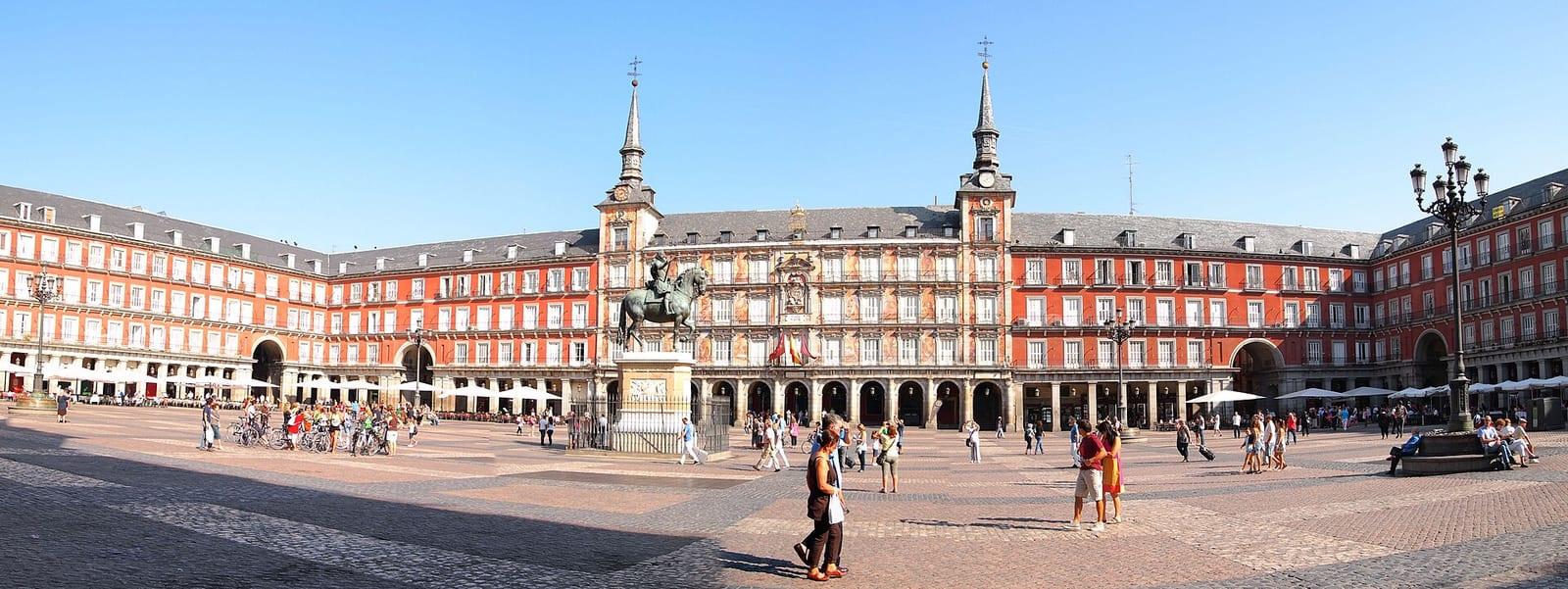
Compare flights when you’re ready.
In pictures
Open a photo for a closer look.
01Official rules: where they are set
Entry requirements, the laws that differ from Canada, and the current safety assessment for Spain are published by the Government of Canada in its travel advice for Spain, linked below. That page also explains the Schengen framework for Spain and points to the official European Union channels for the planned ETIAS travel authorisation. Read it before booking and again before flying.
Adolfo Suárez Madrid-Barajas Airport is run by Aena, the Spanish airports authority, and Aena publishes the terminal information, the ground transport options with their fares, and the assistance services for the airport. Turismo Madrid, at esmadrid.com, is the official tourism site for the city. Questions that depend on a rule, a fare or a timetable belong to those authorities, and the alsoAsk list below names them.
02Getting there and around: verified transport information
Aena lists three rail and bus routes from the airport. Metro line 8 runs from Nuevos Ministerios to the Airport T4 station, stopping also at the Airport T1-T2-T3 station, and Aena gives its hours as 06:05 to 02:00. The Cercanías line C1 serves Terminal 4 only, running through Chamartín and Atocha to Príncipe Pío, and Aena lists its one-way fares by zone, from €1.70 for one to two zones. Travellers arriving at Terminals 1, 2 or 3 use the metro, a bus or the free terminal transfer to reach the C1.
For buses, Aena lists the Airport Express, line 203, between Atocha station and the airport, running 24 hours with a standard fare of €5 irrespective of the length of journey. Ordinary city bus lines also serve the terminals, and Aena lists their standard one-way fare at €1.50. Road routes depend on traffic in a way the rail routes do not, which matters at peak hours.
Inside the city, the Metro, the EMT city buses and the Cercanías trains are coordinated by the Consorcio Regional de Transportes de Madrid, the CRTM, which publishes the transport card system and a ticket finder. Aena explains the practical point for arrivals: one-way and 10-journey tickets must be loaded onto a Multi card, which costs €2.50, and the card is free for travellers who buy tourist passes. The CRTM site is the place to check which ticket fits a given stay.
The airport supplement is the detail to remember. Aena states that passengers holding a Metro zone A ticket must pay a €3 airport supplement to get on or off at the airport metro stations, on top of a one-way fare of between €1.50 and €2 depending on the number of stations. Taxis are listed by Aena among the airport transport options, with ranks at the terminals. Airport assistance for passengers with reduced mobility is arranged through the airline, and Aena lists a barrier free assistance service at the airport.
03Getting it right on the ground: practical customs that vary
The currency is the euro. Cards are accepted in hotels, larger restaurants and chain shops, while small cafés, market counters and some taxis are easier with cash, and small notes help. For the metro, payment starts with the Multi card rather than a paper ticket, so the first purchase at the airport machines includes the card itself unless a tourist pass is chosen.
Spanish is the language of daily life in Madrid, and station names, signs and menus are in Spanish. A few words cover most transactions, and the pocket phrases below give the essentials. For connectivity, a data plan arranged before landing avoids the search for a local SIM at the terminal, and the eSIM checklist linked below covers what to confirm before buying one. Business travellers should note that the airport metro and the C1 both reach Chamartín, the northern rail hub.
One caution comes from the Government of Canada: people posing as plainclothes police officers may ask to see a passport or a wallet, and Canada advises politely asking to see an official identification badge in that situation. Distraction techniques in crowded places, such as a stranger pointing out a stain on clothing, are also named in the Canadian advice. A closed bag and a pause before handing anything over answer both.
04Optional courtesies
A greeting before a request is the habit in shops and cafés: Buenos días in the morning, Buenas tardes later, and Gracias to close. In bars, ordering at the counter and greeting the room on entry are normal courtesies. None of this is required, and English is widely understood in hotels and at the main sights, but the greeting changes the tone of the exchange.
Meal times run late: lunch is a main meal, often eaten well into the afternoon, and dinner starts late in the evening, so restaurants that look empty early may not have opened their evening service. Leaving small change after a coffee or rounding up after a meal is a common courtesy in cafés and bars; no fixed rule sets the amount.
05Where to stay: Centro, Salamanca and Malasaña
Centro, around Puerta del Sol and Gran Vía, is the base for a first visit: Plaza Mayor, the old centre and the main theatres are on foot, metro lines cross at Sol and Gran Vía, and the Airport Express ends at Atocha at the southern edge of the district. It is also the busiest and loudest base at night. Salamanca, northeast of the centre, is a planned district of wide streets and balconied apartment buildings, with the Retiro park at its southern edge, larger hotels and a quieter, more residential feel.
Malasaña, just north of Gran Vía, is a compact grid of smaller streets, independent shops, cafés and bars, with a younger evening scene and mostly smaller hotels and apartments. It suits travellers who plan to spend evenings out and walk to the centre. For a business trip, Centro and Salamanca both keep Chamartín and the central stations within a short metro ride, and Salamanca is the calmer of the two for sleep.
06Walking: Gran Vía, the old centre and the Retiro edge
The old centre walks well: from Puerta del Sol, Plaza Mayor, the Royal Palace and the streets of the Habsburg old town form a compact loop of mostly flat walking, and Gran Vía cuts east to west above it with the Cibeles fountain and the Paseo del Prado at its eastern end. Distances inside this loop are short, and the metro is a backup rather than a necessity.
El Retiro Park, named by Turismo Madrid among the city green spaces and a UNESCO World Heritage Site in its description, is the walking release valve for the centre and for Salamanca: broad avenues of trees, the lake and the Alfonso XII monument give an hour of flat walking without traffic. In summer the practical pattern is to walk early or late and give the middle of the day to museums, lunch and shade.
07A first day in Madrid: arrival, the old centre and an evening walk
On the morning of arrival, ride the metro line 8, the Airport Express or the C1 to the accommodation, remembering the supplement if the metro is the choice, then drop the bags and keep the first outing short. A coffee near the hotel and a walk around the block fix the geography of the home district before any sightseeing.
In the afternoon, walk the old centre loop at an easy pace: Puerta del Sol, Plaza Mayor and the streets towards the Royal Palace, with a stop at the Mercado de San Miguel by the square for a late lunch or an early taste of the market counters shown in the gallery. Keep the timed museum visits for the second day, when the Prado and its neighbours can be given a full morning.
In the evening, take the Gran Vía walk as the light changes, then eat in the home district, late by northern standards. Malasaña and Centro both fill with dinner crowds, and Salamanca is quieter. An early night is not required in Madrid, but a measured first evening protects an arrival day that started at an airport.
08Common visitor mistakes
Forgetting the €3 airport supplement is the most common Madrid transport error: a standard zone A metro ticket does not open the airport journey on its own, and Aena states the supplement must be paid at the airport stations. A related error is heading for the Cercanías C1 from Terminals 1, 2 or 3, when Aena lists the C1 at Terminal 4 only. Buying the Multi card is part of the first metro purchase, not an optional extra.
The second classic error is planning the day around northern meal times, arriving at restaurants before their kitchens open and misreading the city as closed. The third is crossing the city repeatedly: Madrid rewards a district at a time, with the metro for the jumps between them. Finally, carrying a bag open in the crowded central stations and squares invites the petty theft described in the Canadian advice.
09Safety
The Government of Canada names petty crime, including pickpocketing and bag snatching, as common in Madrid, and lists places where it is frequent: Madrid-Barajas airport, Atocha station, Gran Vía, Plaza Cibeles and the Paseo del Prado, the Puerta del Sol and Plaza Mayor area, and Retiro park. The practical habits are plain: keep bags closed and in front in crowds, keep the phone away at the platform edge and at café tables, and carry a copy of the passport separately from the original, as Canada advises.
Demonstrations take place in Madrid and can disrupt traffic and public transport, according to the Canadian advice. The response is simple: avoid the gathering, follow local authority instructions, and check the CRTM or Metro notices before a time critical ride, including the ride back to the airport. For anything beyond these practical notes, the Canada page linked below is the authority to read.
10If you're flying with something particular
Business: Centro and Salamanca keep the central stations and Chamartín within a short metro ride, and the C1 links Terminal 4 with Chamartín and Atocha directly, which suits a trip built around trains. Travellers should confirm meeting addresses against the district map before choosing the base, and should keep the return airport ride in the diary with the supplement already loaded. Solo travellers are well served by the central districts, where streets and transport run late, and by bases on lit, busy avenues rather than quiet side streets.
First-time visitors should master three things on day one: the Multi card, the airport supplement and the late meal pattern, after which Madrid becomes simple to use. Travellers with reduced mobility should book airport assistance through the airline, as Aena describes, and check step free access at the specific metro stations on the route with Metro de Madrid or the CRTM before relying on them.
Stay a little longer
Where will you base yourself in Madrid?
Choose the district that fits the trip. Switch between Centro and Salamanca while keeping the same dates.
Before booking in Centro
- Ask whether the room faces Gran Vía or a side street if sleep matters.
- Check which metro lines serve the exact address for the airport ride.
- Confirm late arrival arrangements for evening flights.
Choose a check-in date, then a duration to set check-out.
Still planning? Leave both dates blank to browse.
Your destination: Centro
Affiliate link through Stay22. FlyingWith may earn a commission if you book. The booking provider handles prices and payment.
Going somewhere else? Search worldwideReuse them on other accommodation searches and in another language. Only the dates are kept; clear them when your trip changes.
What should the property confirm?
Choose the arrangements you want to check before paying.
These are questions for the property. They do not filter the search results, and your choices stay on this page.
Keep a useful travel checklist in your inbox
Get the free checklist link and occasional FlyingWith travel tips. Your saved trip answers stay on this device.
Open the free trip checklist →Take it with you
Your pocket guide
Keep your next steps and useful phrases together in a colourful PDF travel card, ready to save or print.
Before you book
0 of 4 checked
Your checks stay in this tab when you reload or return to this guide. Reset them here, or close the tab when you finish.
Add a calendar reminder
A few useful words
Spanish
Spanish is the language of daily life in Madrid and covers every transaction on this page. A greeting in Spanish before a request is the normal courtesy.
- Buenos días.
- Good morning.
- Por favor.
- Please.
- Gracias.
- Thank you.
- ¿Habla inglés?
- Do you speak English?
- ¿Dónde está la estación de metro?
- Where is the metro station?
- La cuenta, por favor.
- The bill, please.
Official sources
Rules and amounts change. Before you rely on anything marked as an official rule, check the source. These are the official pages we used.
- Travel advice and advisories: Spain · Government of Canada · checked Entry and exit requirements, laws, and the current safety assessment for Spain, including the petty crime notes for Madrid.
- How to get here by bus: Madrid-Barajas Airport · Aena · checked The bus connections at the airport, including the Airport Express line 203 fare and hours, city bus fares and the Multi card requirement.
- Metro de Madrid · Metro de Madrid · checked The Metro network: lines, stations, tickets, fares and service information for Madrid.
- Tourism Madrid, official website · Turismo Madrid · checked Official visitor information for Madrid, its sights, districts and official visitor products such as the Madrid City Card.
- Consorcio Regional de Transportes de Madrid · Consorcio Regional de Transportes de Madrid (CRTM) · checked The regional transport system: the Tarjeta Transporte Público, the ticket finder and the coordination of Metro, bus and Cercanías.
- Entry rules and the safety assessment for Spain: the Government of Canada.
- Airport terminals, assistance and ground transport fares at Barajas: Aena.
- Metro lines, stations and service on the day: Metro de Madrid.
- Which transport ticket fits a stay, and the transport card rules: the CRTM.
Share this guide
Saves a reading copy on this device, visible to anyone using it. Checklist answers and bookings are not saved. Browser storage can be cleared automatically; check your saved guides before travelling.
Help keep this page accurate
Opens an email draft with this page’s public link. You can review it before sending.
Continue planning
Flying there with a particular need
Not sure which applies to your trip? Build your trip profile
Travelling with others? Split costs without accounts.
Before you fly there
- Airport Transfer Checklist: Compare the Whole JourneyCompare public transport, taxis and prebooked airport transfers. Check pickup instructions, total cost, luggage, access and delay terms before paying.
- Travel eSIM Checklist: What to Check Before BuyingCheck device compatibility, coverage, activation and plan limits before buying a travel eSIM. Compare it with roaming and a local SIM, then save a backup.
Travel essentials
Complete your travel plans
Choose the service you need, then compare the offer and its terms with the provider.
Mobile data for your trip
Compare an eSIM with your carrier’s roaming offer and a local SIM. An eSIM only helps if your exact device and the plan suit the trip.
Affiliate partner options
Affiliate links through Travelpayouts. FlyingWith may earn a commission on an eligible purchase or paid service.
Build my eSIM shopping list →Checks before choosing
Installing an eSIM and starting its validity period can be different events. Follow the chosen plan’s instructions. The checklist is a reminder, not an automatic device check.
- Check the device model, purchase region and network lock with the provider before paying.
- Compare the countries covered, data allowance, validity start, hotspot rules and any speed limits.
- Check whether calls and SMS are included. Save maps, the hotel address and installation instructions for offline use.
Getting from the airport
Compare the airport’s official public transport and taxi information with a prebooked transfer. Choose based on the whole journey to your accommodation.
GetTransfer is a transfer marketplace. Availability and suitability depend on the offer; a listed vehicle does not confirm accessible transport or a child seat.
Affiliate partner options
Affiliate links through Travelpayouts. FlyingWith may earn a commission on an eligible purchase or paid service.
Take these details to your airport pickup quote
Copy these questions into your request. A marketplace listing alone does not confirm a child seat or accessible vehicle.
0 of 4 pickup details reviewed
Checks before choosing
- Confirm the exact terminal, meeting point, luggage space and contact method if your flight changes.
- Ask for written confirmation of any child seat, pet or mobility requirement before payment.
- Read the total price, waiting policy, cancellation deadline and refund method for the specific offer.
The provider handles prices, booking terms, payment and support. Review the details there before paying.
Sources checked