Bangkok: Two Airports, Rail Lines and a First Day on the River
Published by FlyingWithSources checked
Bangkok suits first-time visitors, solo travellers and families who plan around rail rather than road. The city pairs temple districts and river boats with the shopping and dining streets of Sukhumvit. The common first mistake is treating a taxi as the default: at busy hours the rail lines move while the roads stand still.
Find a place to stay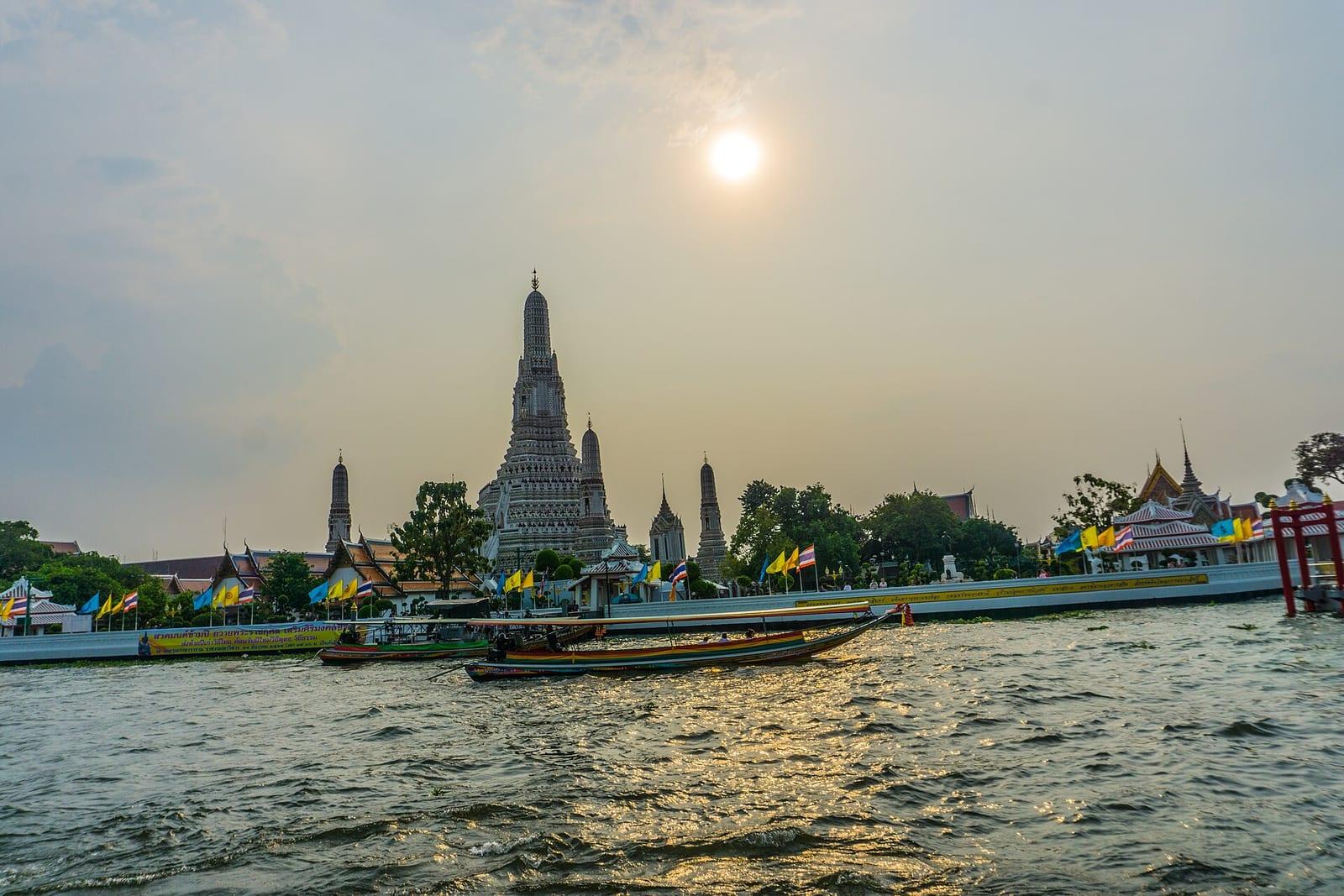
Compare flights when you’re ready.
In pictures
Open a photo for a closer look.
01Official rules: where they are set
Entry rules for Thailand are published by the Government of Canada in its travel advice for Thailand, linked below. Read it before booking and again before flying: it covers entry and exit requirements, laws that differ from Canada's, and the current safety assessment.
All travellers must complete a digital arrival card online before they arrive in Thailand, at every point of entry, air, land or sea. Canada's advice links the form to Thailand's Immigration Bureau, whose official site, tdac.immigration.go.th, states that no fee is required. The passport rule Canada publishes is a passport valid for at least six months on entry. Visa rules are the Thai authorities' to set; check the Canada page and the Immigration Bureau before travelling.
02Getting there and around: verified transport information
Suvarnabhumi (BKK) is the main international airport, east of the city, and Don Mueang (DMK) handles many domestic and regional flights. Airports of Thailand lists the Airport Rail Link station on the basement level of the Suvarnabhumi terminal, with trains from 05:30 to midnight. The line ends at Phaya Thai, where passengers change to the BTS Skytrain, and it stops at Makkasan, which connects with the MRT. Don Mueang has no rail link to the centre; the usual routes are a taxi or a bus, and Airports of Thailand lists a free shuttle between the two airports for connecting passengers.
Inside the city, the BTS Skytrain runs elevated lines through Siam, Sukhumvit and Silom, and the MRT runs underground lines that reach the Old City, Chinatown and the river piers. The two networks cross at Siam and at Asok, and fares are charged separately on each system, so a change of line starts a new fare. Boats run on the Chao Phraya and on the canals: the river boats serve the Grand Palace, Wat Arun and the riverside hotels, and the canal boats cross the city from the Pratunam area.
Tickets are sold per system, not for the whole network. The BTS sells single-journey cards and a stored-value Rabbit card, and offers a one-day pass for its two main lines. The MRT sells single-journey tokens and takes contactless bank cards at its gates. Fares are charged by distance on both systems; the exact price for a ride is on the fare board at the station, and each operator publishes its own fare table.
Taxis are metered, and the practical rule is to ask for the meter before the car moves or agree the total fare before boarding. At Suvarnabhumi the public taxi rank is on Level 1, and Airports of Thailand publishes an airport surcharge of 50 baht on top of the meter, plus expressway tolls. Ride-hailing pickup at the airport is from a marked point on Level 1. The BTS and MRT stations have lifts and escalators at many stations, and airport assistance is arranged through the airline; ask the operator or the hotel about step-free routes before relying on a specific station.
03Getting it right on the ground: practical customs that vary
The currency is the Thai baht. Cards are accepted in hotels, larger restaurants, malls and chain shops; cash is the norm in markets, street stalls, canal boats and many taxis. ATMs are common in the centre and at the airports, and fees are set by the bank and the ATM operator. Small notes make taxis and market purchases easier, and money is changed at banks and licensed exchange counters.
Thai is the working language, and English is widely used in hotels, at the airports and around the main sights, less so in neighbourhood shops and markets. A data SIM or eSIM bought before departure works on landing; airport shops also sell local SIMs, and a passport is needed to buy one. The Tourism Authority of Thailand publishes visitor information in English on tourismthailand.org.
One pattern to recognise: a driver or a stranger near a temple says the attraction is closed today and offers to take the visitor to a friend's shop instead. The temples keep published hours, so the answer is to check the hours at the gate or on the official site and continue with the original plan. The same rule covers tuk-tuks and taxis: agree the fare before boarding, or ask for the meter, and let a car go if the driver refuses both.
04Optional courtesies
A greeting in Thai opens most exchanges. Sawasdee is the everyday hello, and khop khun is thank you; the pocket phrases below cover the requests a visitor is most likely to make. Thai is a tonal language and romanised spellings vary, so the phrases below are given in romanisation rather than Thai script, and the note under the pocket guide says the same.
Shoes come off before entering a temple building and before entering many homes, and shoulders and knees are covered inside temple grounds. Ask before photographing people, and accept a refusal without argument. The wai, palms together with a slight bow, is the usual greeting and thank you; returning it is a courtesy, not an obligation.
05Where to stay: Sukhumvit, Riverside and the Old City
Sukhumvit is the practical base for a first stay: the BTS runs along it, the MRT crosses it at Asok, and restaurants, malls and street food are close. The Riverside puts the river boats and the view of Wat Arun within a short walk or boat ride, and it suits a slower stay built around the river. The Old City, Rattanakosin, is the closest base to the Grand Palace, Wat Pho and Wat Arun, with quieter streets at night and fewer late-night services.
Choose by how the days will run: Sukhumvit for rail access and evening choices, Riverside for the river, the Old City for temples on foot. Book the first night before arriving; the address is needed for the digital arrival card, and arriving after a long flight is not the moment to go looking for a room.
06Walking: the Old City, the river and Sukhumvit
The Old City walks best: the Grand Palace, Wat Pho and the river piers sit close together, and the lanes around them are made for walking rather than driving. Riverside walks are short stretches between piers and hotels rather than one long promenade; the boat is the way to move along the river. Sukhumvit walks well in the evening along its main road and its side streets, with raised walkways linking the BTS stations to the malls.
Heat and traffic shape any walk: plan the walking hours for the morning and the late afternoon, use the BTS or the MRT to skip the midday heat, and carry water. Footpaths are uneven in places and motorbikes use them in some stretches, so walk facing the flow where there is no pavement and cross at crossings and footbridges.
07A first day in Bangkok: river, temples and Sukhumvit
Start the morning in the Old City. Arrive at the Grand Palace area early, when the heat is lower and the queues are shorter, then walk to Wat Pho. Cross the river by boat to Wat Arun, and take the river boat back toward the centre for lunch.
Spend the afternoon on the river and in one covered place: a river boat to a riverside stop, then a museum or a mall out of the heat. The BTS from the river side reaches Sukhumvit in a few stops; a short rest at the hotel in the middle of the afternoon is a plan, not a failure.
In the evening, walk Sukhumvit or the riverside: street food, a market lane, and the river at dusk. Keep dinner early and close to the hotel on the arrival day, and save the night markets and the late boat rides for the second day, when the city is familiar.
08Common visitor mistakes
Taking a taxi or tuk-tuk without agreeing the fare or asking for the meter, then arguing about the price at the end. Following a stranger who says a temple is closed and offers a different shop or tour. Treating the whole city as walkable on foot, and planning a midday walk across town in the heat.
Changing money with a stranger or at an unmarked counter. Carrying only large notes for taxis and market stalls. Leaving the arrival card until the airport, and booking no first night before the flight.
09Safety
The Government of Canada's travel advice for Thailand, linked below, is the primary source for safety, laws and entry requirements. Beyond it, the precautions are the ordinary ones for a busy city: keep bags closed and on the side away from the street, use licensed taxis and the official airport ranks, keep a copy of the passport separately from the original, and tell the hotel where the day is headed.
Demonstrations occur in Bangkok and can close roads and transit stations, so check local media and avoid demonstration sites. Road traffic is fast and motorbikes use pavements in places; cross at crossings and footbridges. In an emergency, the tourist police contact is published in Canada's advice and on the Tourism Authority of Thailand's site.
10If you're flying with something particular
Families with children: children are welcomed in restaurants and at the temples, and a carrier is easier than a stroller on river boats, at the piers and in market lanes. The heat and the river shape what a small child can do in a day, so plan temple visits for the morning and keep a rest in the afternoon.
Solo travellers: the rail lines, the river boats and the marked taxi ranks make the city workable alone, and the practical habits are the same as for any group: agree fares in advance, keep the hotel address to hand, and let the hotel know the plan for the day. First-time visitors should treat the first day as an arrival day: one district, the river, and an early night, with the rest of the city left for the days after.
Stay a little longer
Where will you sleep in Bangkok?
Choose the base that fits your days. Switch between Sukhumvit and the Riverside while keeping the same dates.
Before booking in Sukhumvit
- Confirm the nearest BTS station and the walk from it to the hotel.
- Ask how late the building entrance and the lift stay open.
- Check the walk to the MRT at Asok for a river day.
Choose a check-in date, then a duration to set check-out.
Still planning? Leave both dates blank to browse.
Your destination: Sukhumvit
Affiliate link through Stay22. FlyingWith may earn a commission if you book. The booking provider handles prices and payment.
Going somewhere else? Search worldwideReuse them on other accommodation searches and in another language. Only the dates are kept; clear them when your trip changes.
What should the property confirm?
Choose the arrangements you want to check before paying.
These are questions for the property. They do not filter the search results, and your choices stay on this page.
Keep a useful travel checklist in your inbox
Get the free checklist link and occasional FlyingWith travel tips. Your saved trip answers stay on this device.
Open the free trip checklist →Take it with you
Your pocket guide
Keep your next steps and useful phrases together in a colourful PDF travel card, ready to save or print.
Before you book
0 of 4 checked
Your checks stay in this tab when you reload or return to this guide. Reset them here, or close the tab when you finish.
Add a calendar reminder
A few useful words
Thai
Thai is written in Thai script; the phrases below use romanised Thai, and romanisation varies, so a spelling that looks different can be the same phrase. English is widely understood in hotels and at the main sights.
- Sawasdee.
- Hello.
- Khop khun.
- Thank you.
- Tao rai?
- How much is it?
- Hong nam yu thi nai?
- Where is the toilet?
- Chai.
- Yes.
- Mai ao, khop khun.
- No thank you.
Official sources
Rules and amounts change. Before you rely on anything marked as an official rule, check the source. These are the official pages we used.
- Travel advice and advisories: Thailand · Government of Canada · checked Entry and exit requirements, laws that differ from Canada's, and the current safety assessment for Thailand.
- Transportation at Suvarnabhumi Airport · Airports of Thailand · checked How to reach and leave Suvarnabhumi Airport: the Airport Rail Link, taxis, buses and the airport shuttle.
- BTS Skytrain · Bangkok Mass Transit System Public Company Limited · checked The Skytrain network: its lines, stations and ticket types in Bangkok.
- Tourism Authority of Thailand · Tourism Authority of Thailand · checked Visitor information for Thailand, including Bangkok, in English.
- Thailand Digital Arrival Card (TDAC) · Immigration Bureau, Thailand · checked The official digital arrival card: who must complete it and that no fee is required.
- Airport Rail Link hours and fares on the day: Airports of Thailand and the Airport Rail Link operator.
- BTS and MRT fares and the one-day pass: the BTS and MRT operators.
- Entry rules and the digital arrival card: Thailand's Immigration Bureau.
- Whether a temple is open, and its hours: the temple or the Tourism Authority of Thailand.
Share this guide
Saves a reading copy on this device, visible to anyone using it. Checklist answers and bookings are not saved. Browser storage can be cleared automatically; check your saved guides before travelling.
Help keep this page accurate
Opens an email draft with this page’s public link. You can review it before sending.
Continue planning
Flying there with a particular need
Not sure which applies to your trip? Build your trip profile
Travelling with others? Split costs without accounts.
Before you fly there
- Airport Transfer Checklist: Compare the Whole JourneyCompare public transport, taxis and prebooked airport transfers. Check pickup instructions, total cost, luggage, access and delay terms before paying.
- Travel eSIM Checklist: What to Check Before BuyingCheck device compatibility, coverage, activation and plan limits before buying a travel eSIM. Compare it with roaming and a local SIM, then save a backup.
Travel essentials
Complete your travel plans
Choose the service you need, then compare the offer and its terms with the provider.
Mobile data for your trip
Compare an eSIM with your carrier’s roaming offer and a local SIM. An eSIM only helps if your exact device and the plan suit the trip.
Affiliate partner options
Affiliate links through Travelpayouts. FlyingWith may earn a commission on an eligible purchase or paid service.
Build my eSIM shopping list →Checks before choosing
Installing an eSIM and starting its validity period can be different events. Follow the chosen plan’s instructions. The checklist is a reminder, not an automatic device check.
- Check the device model, purchase region and network lock with the provider before paying.
- Compare the countries covered, data allowance, validity start, hotspot rules and any speed limits.
- Check whether calls and SMS are included. Save maps, the hotel address and installation instructions for offline use.
Getting from the airport
Compare the airport’s official public transport and taxi information with a prebooked transfer. Choose based on the whole journey to your accommodation.
GetTransfer is a transfer marketplace. Availability and suitability depend on the offer; a listed vehicle does not confirm accessible transport or a child seat.
Affiliate partner options
Affiliate links through Travelpayouts. FlyingWith may earn a commission on an eligible purchase or paid service.
Take these details to your airport pickup quote
Copy these questions into your request. A marketplace listing alone does not confirm a child seat or accessible vehicle.
0 of 4 pickup details reviewed
Checks before choosing
- Confirm the exact terminal, meeting point, luggage space and contact method if your flight changes.
- Ask for written confirmation of any child seat, pet or mobility requirement before payment.
- Read the total price, waiting policy, cancellation deadline and refund method for the specific offer.
The provider handles prices, booking terms, payment and support. Review the details there before paying.
Sources checked